Local Wisdom & Cultural Heritage
Artworks that honor regional traditions and site history. These projects bring cultural narratives into modern structural art.

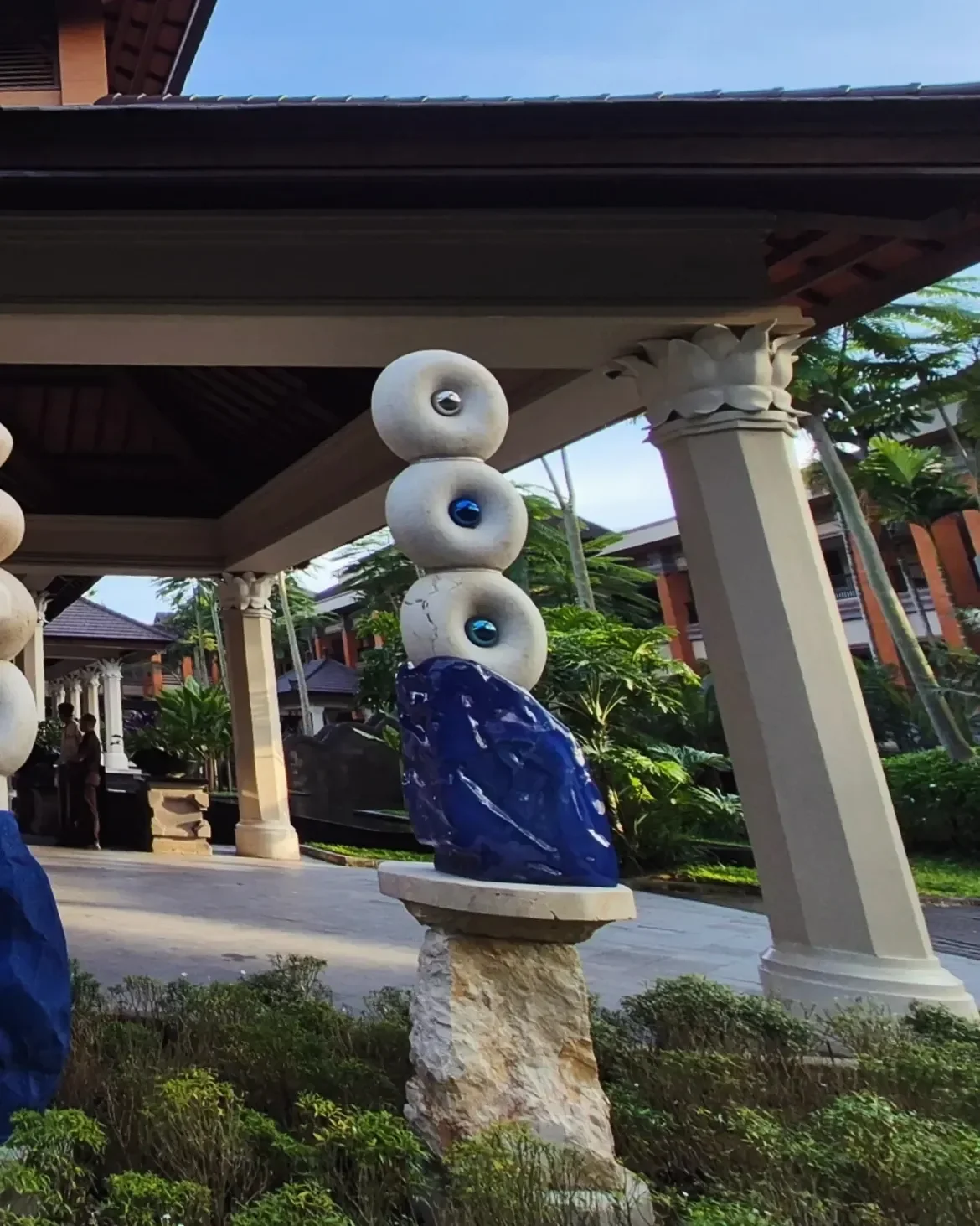
“DHATU” (2026)

“AINSIJAM” (2023)
“DHATU” (2026)
Marble, Stainless Steel, Resin
Piece A: 250 × 90 × 90 cm | Piece B: 230 × 70 × 62 cm | Piece C: 210 × 83 × 70 cm
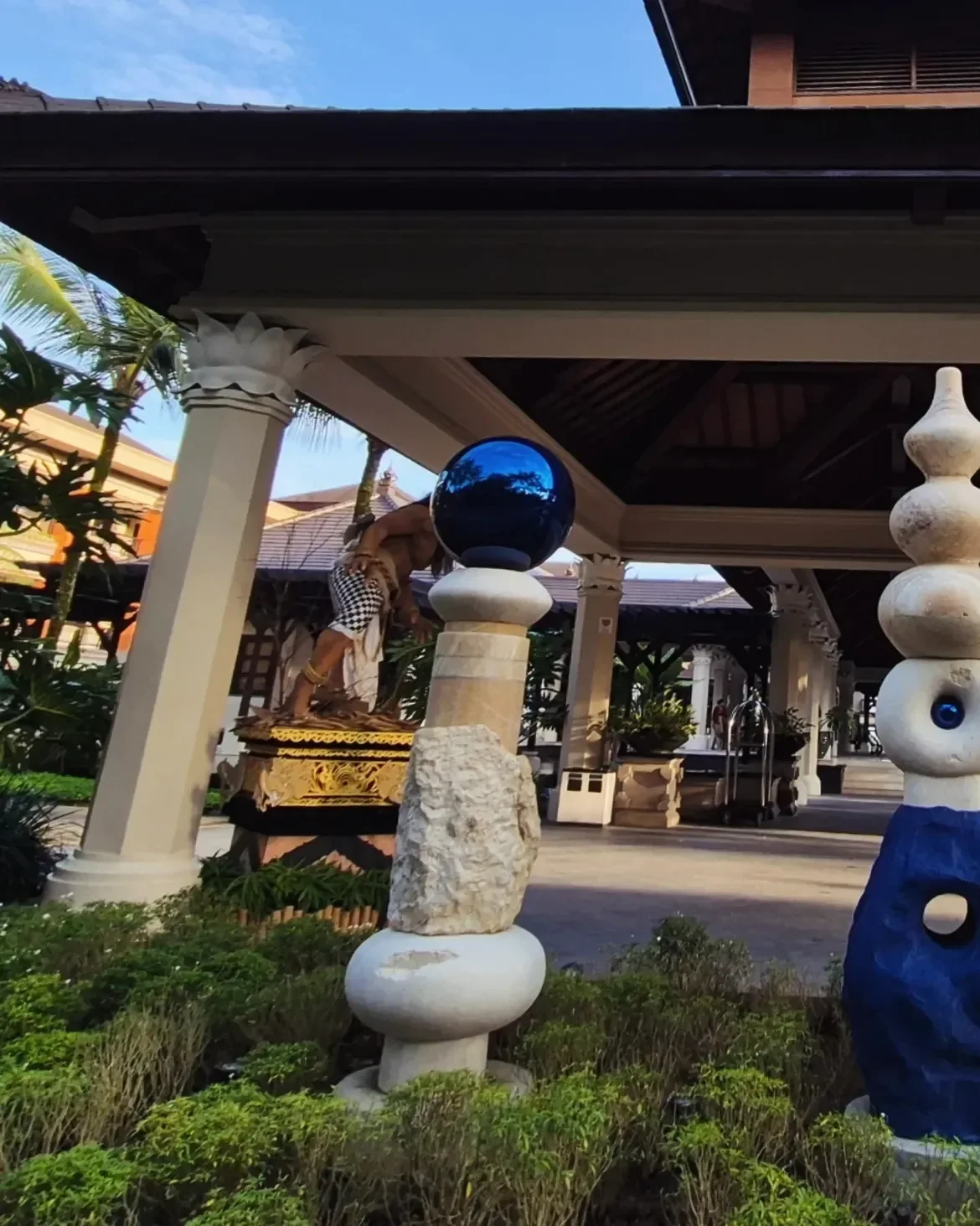
Dhatu is derived from Tridhatu, a three-colored thread in Balinese tradition symbolizing the cosmic bond between humans, nature, and the transcendent. In this work, Dhatu signifies connection and convergence—a melting pot of cultures, materials, and experiences within a global hospitality context. Inspired by the vertical structure of Gebogan (traditional offerings), the work is translated into contemporary formalist abstraction through stacked geometric organic modules. Abstraction functions as a universal visual language, enabling cross-cultural interpretation while transforming ritual symbolism into a global conceptual structure. Variations in scale and height suggest a narrative of human journey—from the material world toward transcendental aspirations.
The multimaterial approach is positioned as an epistemological strategy:
natural stone represents the earth and Balinese locality, while resin, blue pigments, and reflective surfaces evoke the sky, technology, and cosmopolitan worlds. Material becomes a narrative medium bridging tradition and modernity, nature and industry, local and global. The vertical structure refers to the mountain as axis mundi, reinterpreted as a spiritual threshold within the drop-off lobby—a transitional space between worldly travel and Ubud’s contemplative landscape. As a site-specific public artwork, Dhatu functions as a visual gesture of welcome, forging bonds between guests, place, and the Balinese cultural landscape.



“AINSIJAM” (2023)
Stone, Metal, Acrylic, Resin
198 × 94 × 240 cm
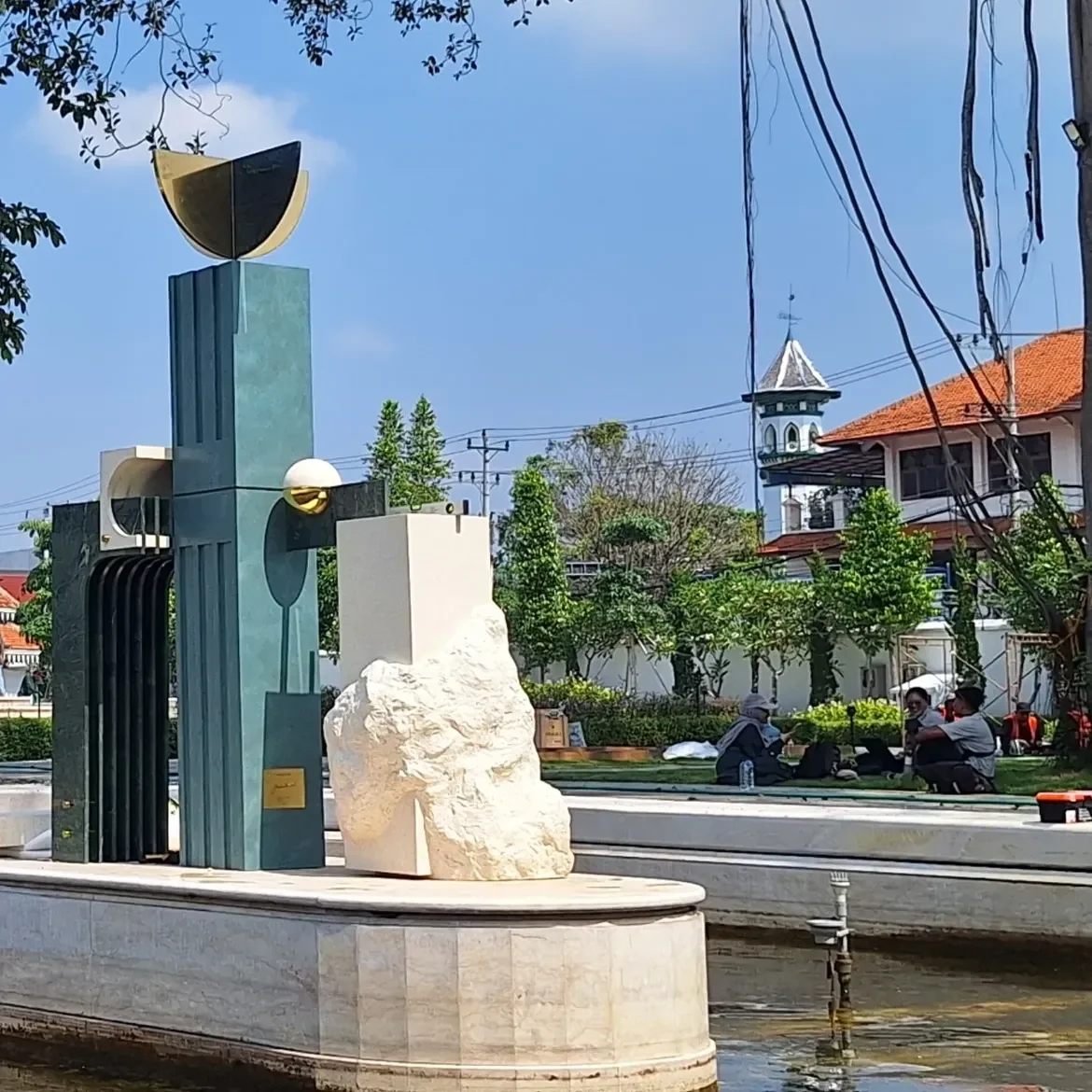
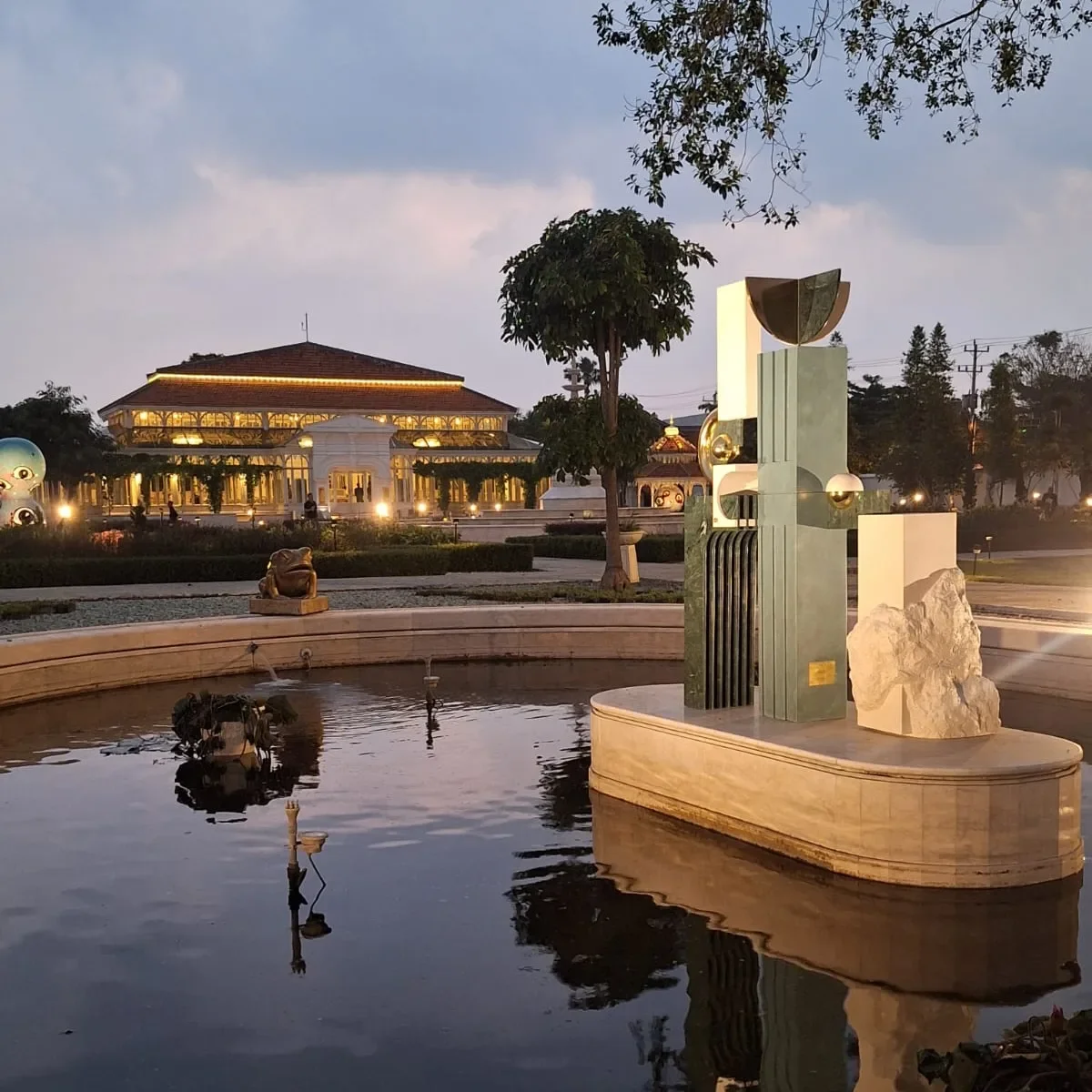
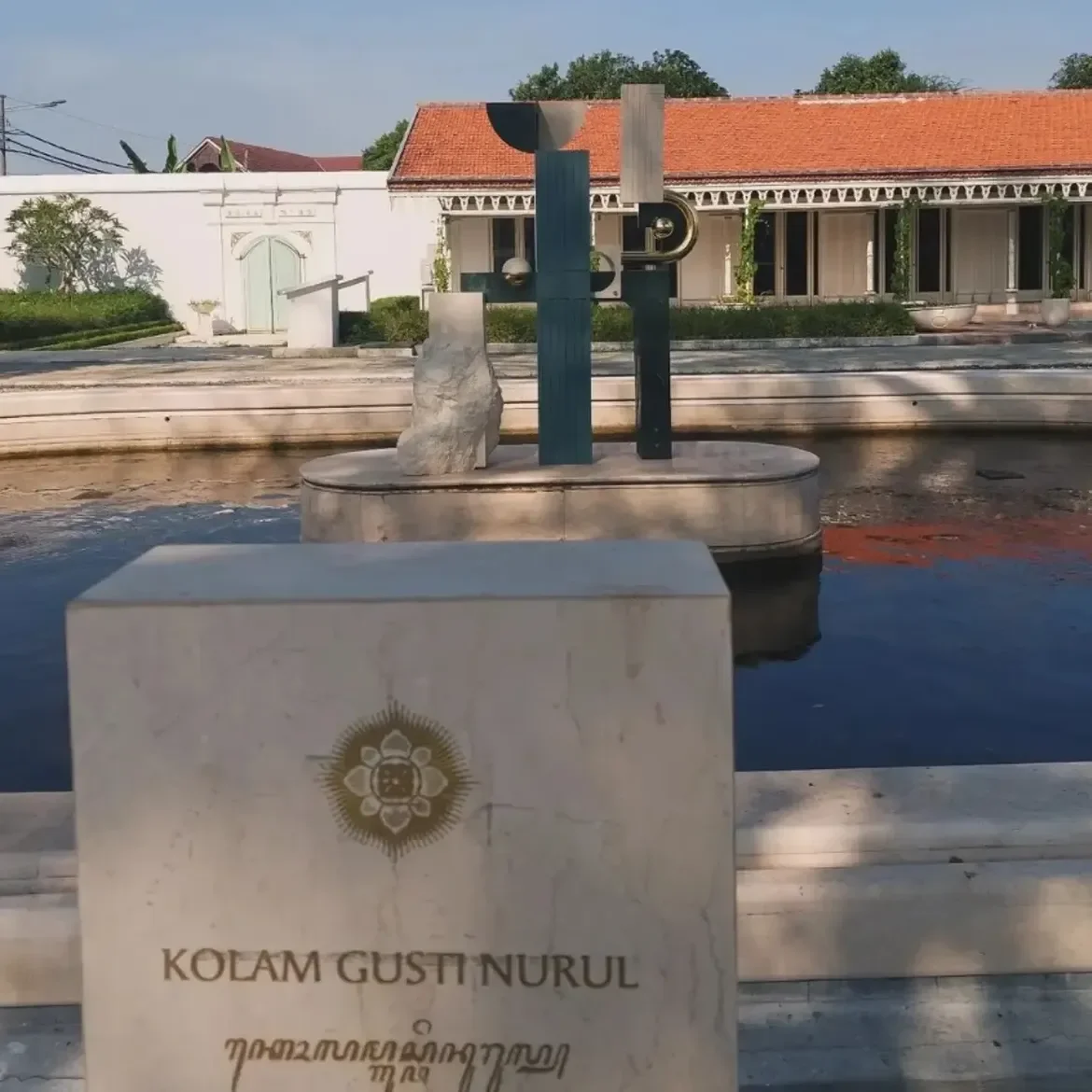
At the Surakusuma exhibition in Mangkunegaran Art Garden, Gabriel Aries displays Ainsijam (2023) in the middle of Gusti Nurul pond. Gabriel Aries explores new materials in his artistic practice, expanding beyond stone sculpture. His formalist background introduces visitors to early avant-garde roots in modern sculpture. He uses abstract forms to highlight new structural values through technical processing and material quality. Placing this work in Gusti Nurul pond matches the spirit of Gusti Nurul. As the daughter of Mangkunegara VII, she grew up in a cosmopolitan environment familiar with Western avant-garde thought.
"My architectural background influences my sculptural approach. I always consider the surrounding space and the public." Tumurun Museum commissioned this work. The concept reflects the culture of Solo as the location of Tumurun Museum. It incorporates royal palace culture, including elements of color, material, and the historical openness of the Solo royal palace toward European culture.
A summary of journeys that inspire his spiritual needs frames every phase of Gabriel Aries' work. "Ainsijam means harmony. I created it after my Umrah pilgrimage. I gained insights and inspiration from the beautiful materials in the construction around the Al-Haram Mosque and Nabawi Mosque."
The elegance and simplicity of the architecture and interior in Nabawi Mosque reflect harmonious human relationships, or Habluminannas. You can see this in the choice of green and white stone, along with brass metal accents.
"I try to present harmony, alignment, and balance within diversity. Religion teaches these basic principles for us to manifest in daily life." Gabriel Aries believes every material humans still use for civilization holds contemporary meaning, regardless of when people discovered it. Speaking about material ties us to history and the life embedded within it.